Holy Thursday
Then he took a cup, gave thanks,
and gave it to them, saying, “Drink from it, all of you, for this is my blood of the covenant, which will be shed on behalf of many for the forgiveness of sins.
Matthew 26: 27-28
Holy Thursday of the Lord's Supper is March 25th, 2027 for this Liturgical Year.
What does Holy Thursday Commemorate?
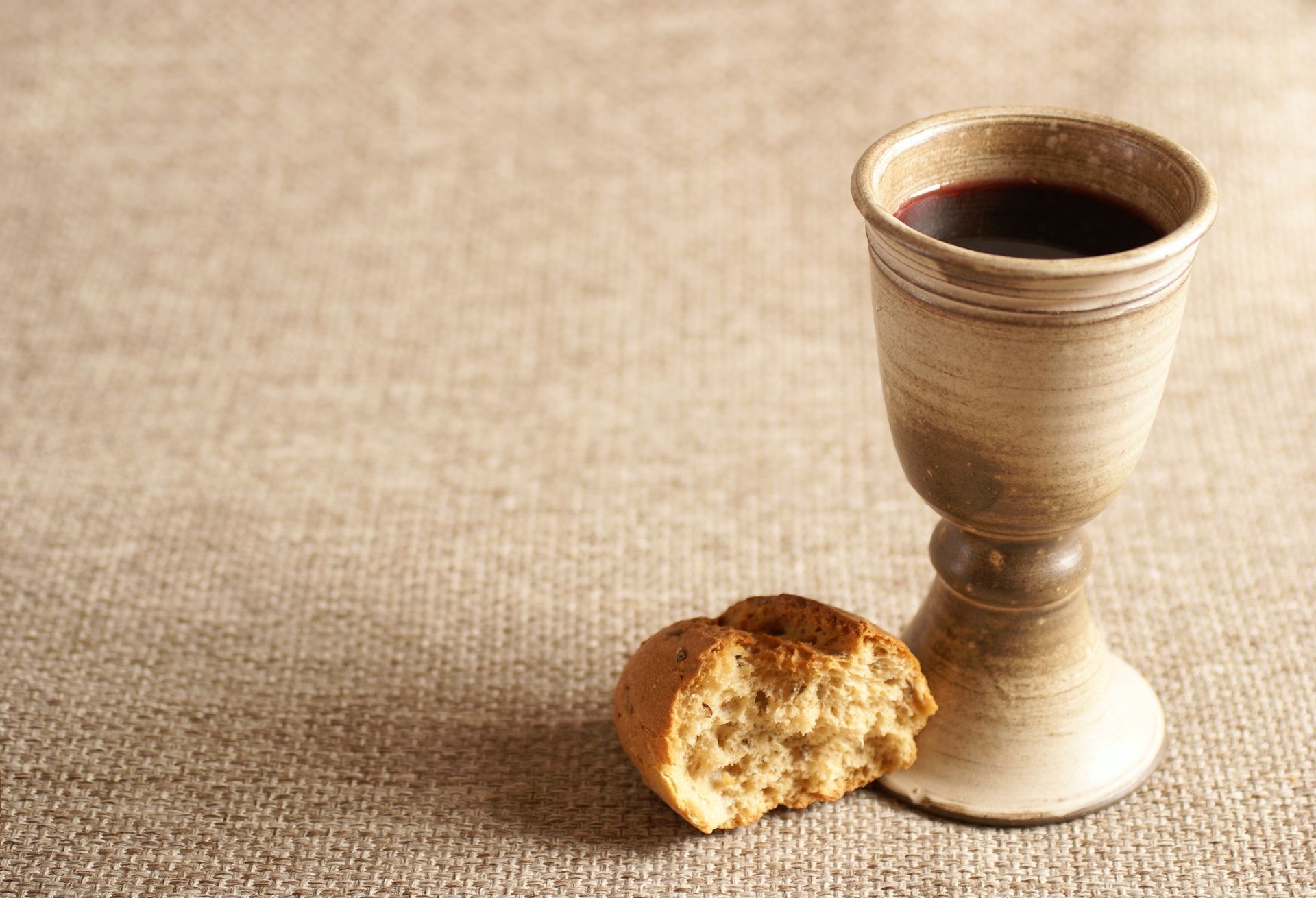
Holy Thursday is the commemoration of the Last Supper of Jesus Christ, when he established the sacrament of Holy Communion prior to his arrest and crucifixion.
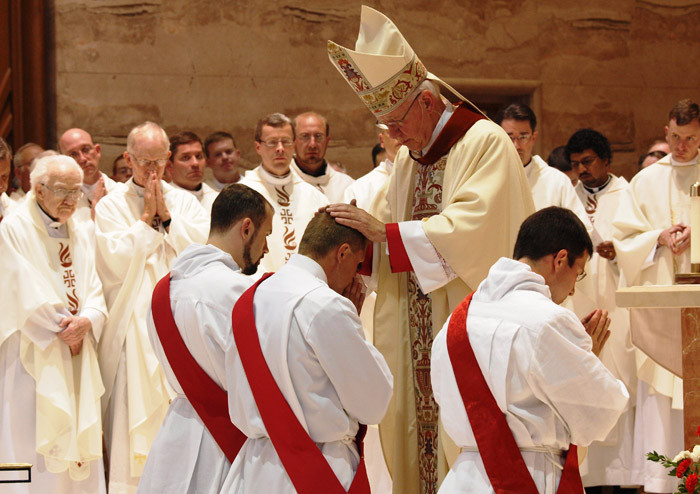
Holy Thursday also commemorates His institution of the priesthood.
This holy day falls on the Thursday before Easter and is part of Holy Week.
Jesus celebrated the dinner as a Passover feast. Christ would fulfill His role as the Christian victim of the Passover for all to be saved by His final sacrifice.
Commemorating the Sacrament of the Eucharist
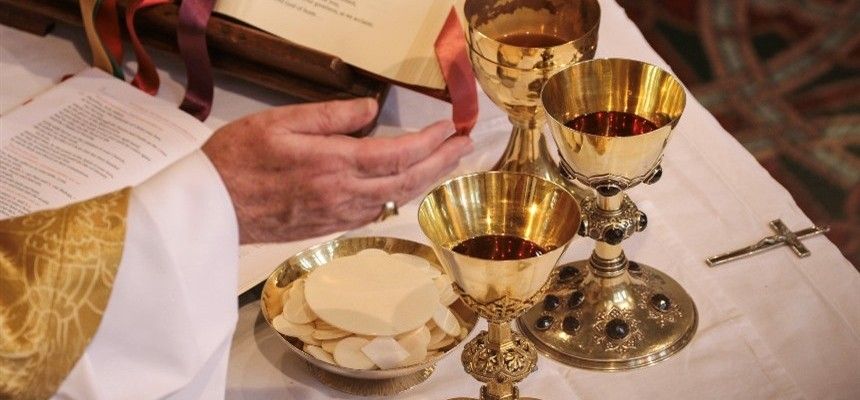
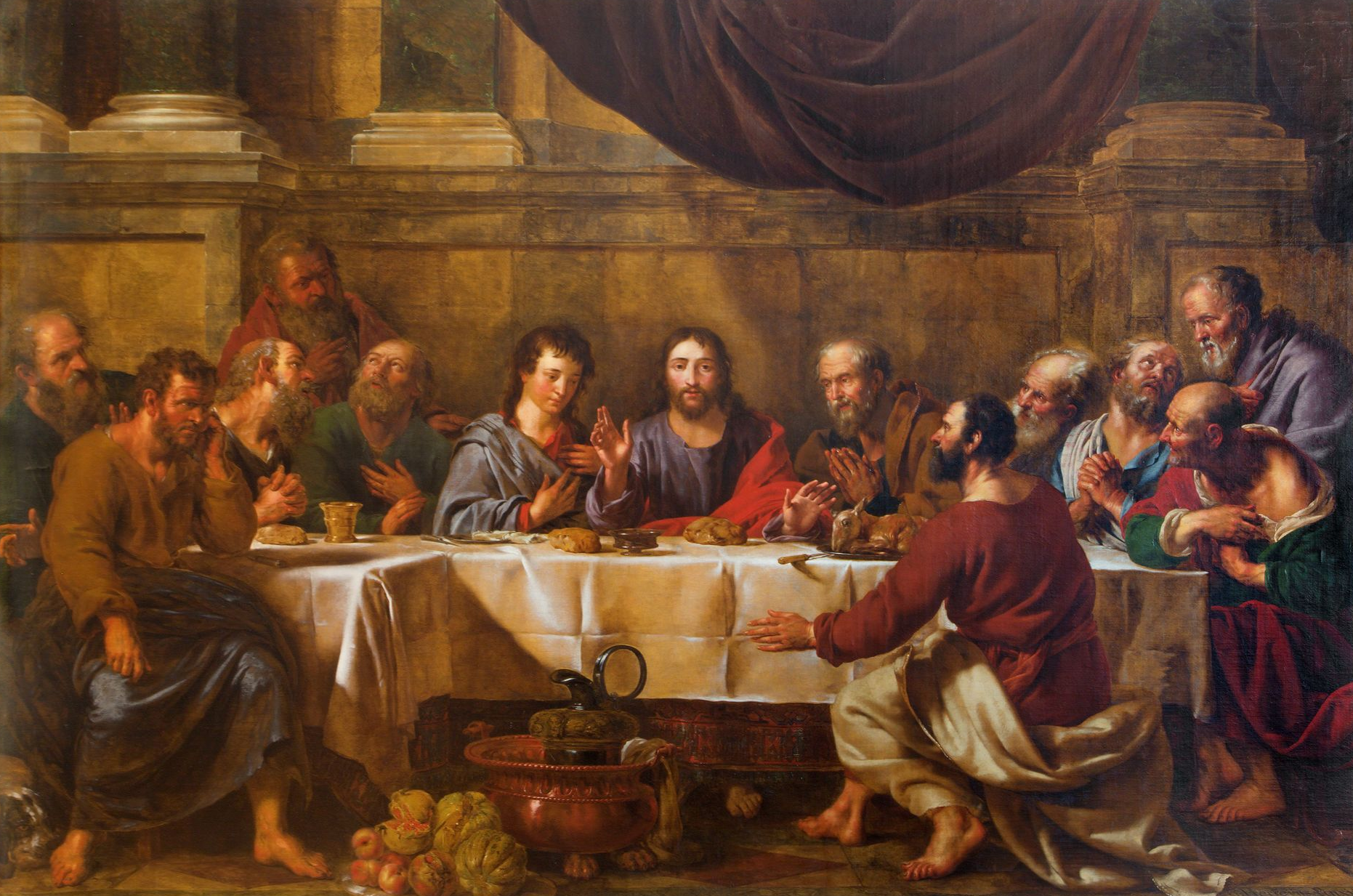
The Last Supper was the final meal Jesus shared with his Disciples in Jerusalem and during this Passover meal, he stated...
...Jesus took bread, said the blessing, broke it, and giving it to his disciples said, “Take and eat; this is my body." Then he took a cup, gave thanks,and gave it to them, saying, “Drink from it, all of you, for this is my blood of the covenant, which will be shed on behalf of many for the forgiveness of sins. I tell you, from now on I shall not drink this fruit of the vine until the day when I drink it with you new in the kingdom of my Father.”
Matthew 26: 26-29
Commemorating the Institution of Priesthood
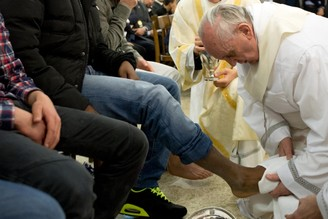
Christ also establishes the special priesthood for his disciples, which is distinct from the "priesthood of all believers." Christ washed the feet of his Disciples, who would become the first priests.
So when he had washed their feet [and] put his garments back on and reclined at table again, he said to them, “Do you realize what I have done for you? You call me ‘teacher’ and ‘master,’ and rightly so, for indeed I am.
If I, therefore, the master and teacher, have washed your feet, you ought to wash one another’s feet. I have given you a model to follow, so that as I have done for you, you should also do.
John 13: 12-15
What are the origins of the Eucharist?
The origins of the Eucharist are found in the Last Supper that Jesus shared with his Apostles.
The Lord, having loved those who were his own, loved them to the end. Knowing that the hour had come to leave this world and return to the Father, in the course of a meal he washed their feet and gave them the commandment of love. In order to leave them a pledge of this love, in order never to depart from his own and to make them sharers in his Passover, he instituted the Eucharist as the memorial of his death and Resurrection, and commanded his apostles to celebrate it until his return; "thereby he constituted them priests of the New Testament." (Council of Trent(1562):DS1740)
-Catechism of the Catholic Church, paragraph 1337
What is the Real Presence of Christ in the Eucharist?
Reenactments at the Mass on Holy Thursday
The central observance of Holy Thursday is the ritual reenactment of the Last Supper at Mass. This event is celebrated at every Mass, as part of the Liturgy of the Eucharist, but it is specially commemorated on Holy Thursday.
Also, during the Mass on Holy Thursday, the establishment of the priesthood is reenacted with the priest washing the feet of several parishioners. The congregation is welcome to participate in the washing of the feet.
At the end of the Holy Thursday Mass, the Body of Christ is brought in procession to the lower church and placed on a temporary "Altar of Repose" away from the sanctuary. It is customary for the faithful to process together to this altar and spend time in quiet prayer and adoration.
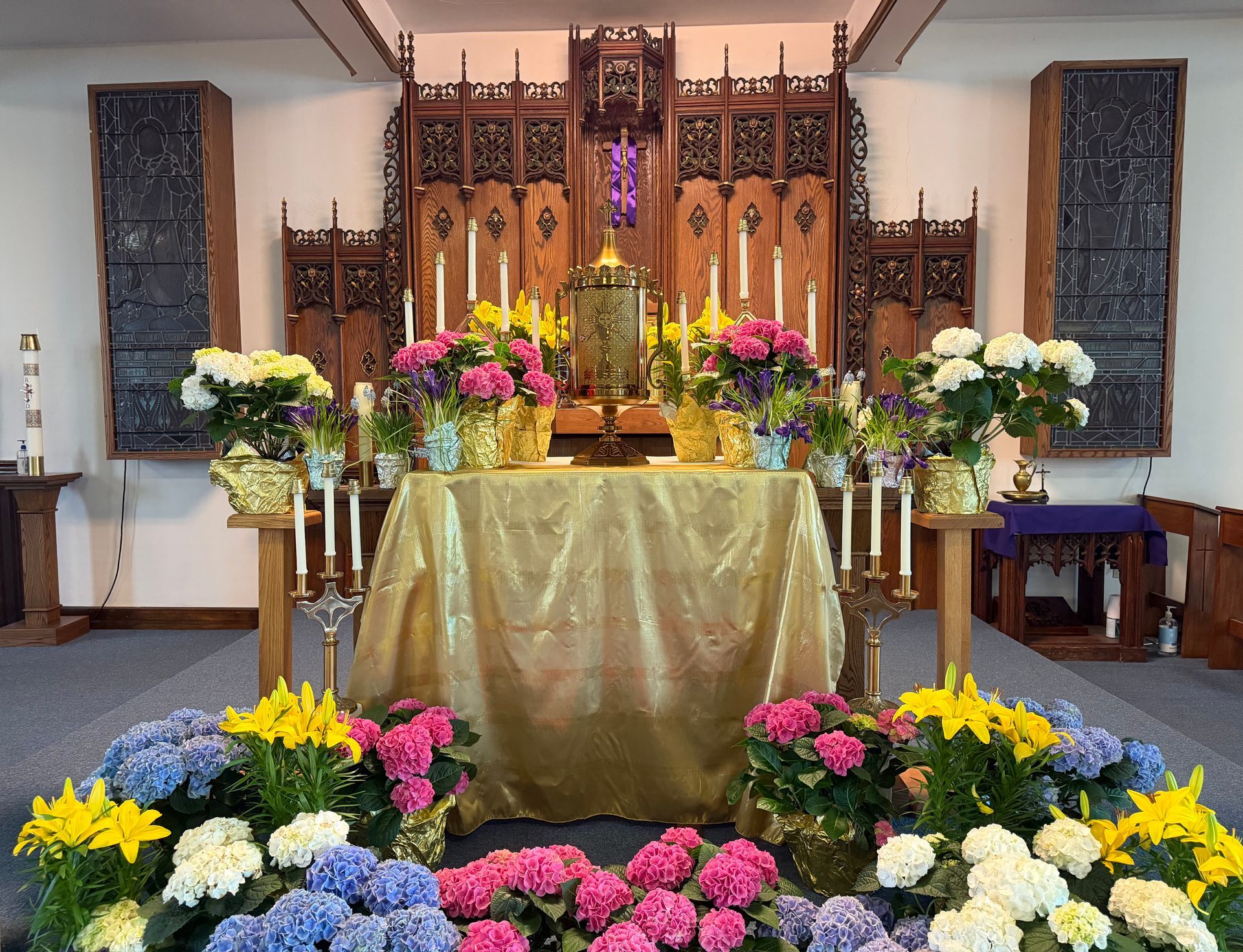
What is the Altar of Repose?
“Repose” means rest, so the altar of repose implies that this space has been set aside as a resting place for Jesus in the Blessed Sacrament, but also for those who choose to keep watch with Him. The altar of repose is separate from the main altar, often a side altar in the church, an adoration chapel or even an entirely different (secular) space dedicated specifically for that purpose on that night. It doesn’t need to be a permanent altar, though it should be made to resemble one, with a tabernacle that will remain open during the specified hours of adoration or a veiled ciborium.
Seven Churches Tradition
An old tradition dates back to the 1500s where Saint Philip Neri instituted a practice in Rome in which he took groups of pilgrims to visit seven basilicas in the city in remembrance of Christ’s Passion. At each of these seven churches, pilgrims focus on seven steps of Jesus’ journey to the cross: the garden of Gethsemane (1), Jesus before Annas (2), Caiaphas (3), Pilate (4), Herod (5), Pilate again (6) and His crucifixion and death (7).
Today, this devotion is making a comeback among Catholics in the U.S. and elsewhere. Pilgrims can make this devotion within their local community, provided they are in close enough proximity to seven churches. Each church sets its own hours for adoration after the Holy Thursday Mass, and some churches host adoration as late as midnight or even the next day if they have a dedicated place and people to keep watch with the Lord all through the night so that the faithful can undertake this devotion. Anyone who wants to “church hop” can begin with Mass at one parish, then travel to six other churches and reflect on the coordinating Scripture passages or simply spend time in prayer at each.
2026 Holy Thursday
Pope Leo XIV's
Mass of the Lord's Supper
at the Archbasilica
of Saint John Lateran
in Rome, Italy
SACRED PASCHAL TRIDUUM
The Easter Triduum begins with the evening Mass of the Lord’s Supper on Holy Thursday, reaches its high point in the Easter Vigil, and closes with Evening Prayer on Easter Sunday.